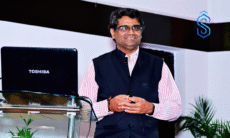

Pune: Dimethyl Ether Technology (DME) developed by CSIR-National Chemical Laboratory (CSIR-NCL) could play a critical role in strengthening India’s energy security and reducing dependence on LPG imports, according to Padma Vibhushan Dr Raghunath Mashelkar, former Director General of the Council of Scientific and Industrial Research (CSIR).
In a post on X (formerly Twitter), Dr Mashelkar highlighted the urgency of adopting indigenous solutions in response to potential global supply disruptions.
“National emergency requires emergent actions. When global chokepoints threaten LPG supplies, Indian innovation has the power to secure sovereignty,” he said.
Dr Mashelkar pointed out that Dimethyl Ether Technology developed at CSIR-NCL offers a viable alternative fuel for household kitchens using domestically produced resources.
He noted that DME can act as a substitute for liquefied petroleum gas (LPG), while delivering cleaner combustion and improved strategic resilience.
“India’s own CSIR-NCL Dimethylether (DME) technology can power kitchens with indigenous fuel,” he said, adding that the fuel can be produced from methanol derived from India’s coal or biomass resources.
According to Dr Mashelkar, CSIR-NCL has already demonstrated the Dimethyl Ether Technology at a pilot scale of 250 kg per day. Industry partners are prepared to rapidly build a 2.5 tonnes per day (TPD) demonstration plant, provided institutional support is made available.
He urged the Centre for High Technology (CHT) to take immediate steps to support scaling up the indigenous technology. “It needs support from Centre for High Technology (CHT), which has the funds precisely for such projects,” he wrote.
Dr Mashelkar also noted that the Government of India is actively monitoring the situation. Drawing from his experience as former Chairman of the Scientific Advisory Committee to the Ministry of Petroleum and Natural Gas, he emphasised the role played by the Centre for High Technology in accelerating indigenous technology development.
“I urge CHT to take emergent steps to immediately support scale up to deal with this national emergency,” he stated.
Dimethyl Ether Technology: A Cleaner Alternative Fuel
Dimethyl Ether Technology represents an emerging pathway toward cleaner and sustainable fuels. DME is a synthetically produced alternative fuel that can be used directly in specially designed compression ignition diesel engines and as a substitute or blending component for LPG.
Under normal atmospheric conditions, DME is a colourless gas widely used in the chemical industry as an aerosol propellant, solvent, refrigerant, and fuel. The fuel demonstrates comparable calorific value and thermal efficiency to conventional fuels, while offering significantly lower emissions.
One of the major advantages of Dimethyl Ether Technology is its clean combustion profile. It produces lower levels of nitrogen oxides (NOx), sulphur oxides (SOx), and particulate matter compared with traditional fossil fuels. The fuel also has a history of use as an ozone-friendly aerosol propellant that replaced ozone-depleting chlorofluorocarbons (CFCs).
In addition to its environmental benefits, DME can serve as an intermediate chemical for producing valuable industrial compounds such as lower olefins, dimethyl sulfate, and methyl acetate.
Role of DME in India’s Energy Self-Reliance
India currently spends substantial foreign exchange on fossil fuel imports to meet domestic and industrial energy demand. At the same time, energy consumption in the country is expected to grow rapidly over the coming decades, as India’s per capita energy consumption remains only about one-fifth of the global average.
In this context, Dimethyl Ether Technology has been identified as an important pathway for achieving energy self-reliance. The fuel can be produced using domestic coal resources or biomass feedstocks. It can also potentially be generated using captured carbon dioxide from flue gases or directly from the atmosphere.
These characteristics position DME as a potential contributor to India’s broader AatmaNirbhar Bharat vision of energy independence and sustainable development.
Indigenous Technology Developed Under CSIR Mission
The Dimethyl Ether Technology at CSIR-NCL was developed under the Catalysis for Sustainable Development mission mode project launched by CSIR in 2017. The process technology involves the dehydration of methanol to produce DME and has reached a Technology Readiness Level (TRL) of 6-7, indicating readiness for pilot-scale demonstration.
Laboratory-scale studies suggest that the indigenous process performs better than existing commercial processes, while maintaining comparable catalyst and process costs.
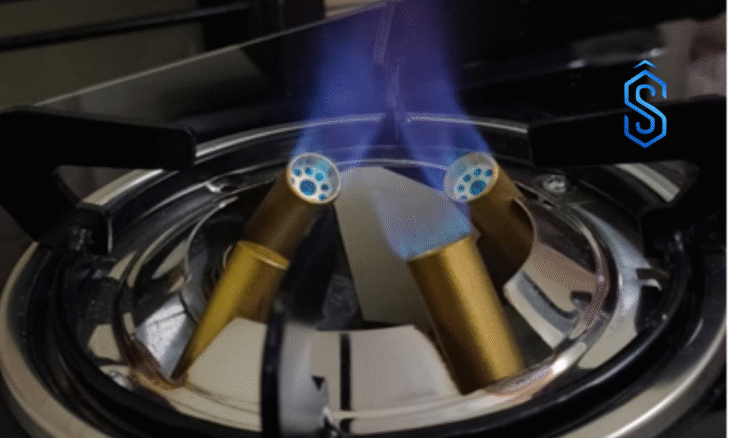
Researchers have also explored multiple applications of DME, including blending it with LPG up to 20 percent. CSIR-NCL has also demonstrated a specially designed burner stove capable of operating with 100 percent DME as cooking fuel.
Potential Applications Across Transport and Industry
Beyond household cooking fuel, Dimethyl Ether Technology has potential applications in transportation and industrial sectors.
In collaboration with the Automotive Research Association of India (ARAI), CSIR-NCL has tested DME-LPG blended fuel in automobiles. Test runs were conducted on an auto-rickshaw using a blend of DME and LPG.
According to ARAI test results, the blended fuel delivered efficient compression ignition with significantly lower NOx emissions and virtually no soot, sulphur oxides, or particulate matter.
DME can also be used in heavy-duty vehicles and engines. Test runs have shown that trucks powered by DME can achieve efficiencies comparable to conventional diesel vehicles while meeting emission standards without the need for diesel particulate filters.
Additionally, smaller DME production units can potentially be installed on ships or diesel engines and generator sets. This could enable the use of DME as a clean marine fuel, supporting India’s Sagarmala programme for sustainable maritime infrastructure.
Industry Partnerships and Commercialisation Efforts
Following successful demonstrations, several chemical industry players have expressed interest in scaling up Dimethyl Ether Technology. CSIR-NCL has entered into agreements with multiple stakeholders to advance commercialisation.
A key partnership includes a Memorandum of Understanding (MoU) and Memorandum of Agreement (MoA) signed between Engineers India Limited (EIL) and CSIR-NCL. The collaboration aims to jointly develop and commercialise the Dimethyl Ether technology while engaging with major oil marketing companies for larger-scale production.
India’s policy think tank NITI Aayog has also identified Dimethyl Ether (DME) Technology as a strategic innovation for enhancing national energy security and promoting a cleaner environment.